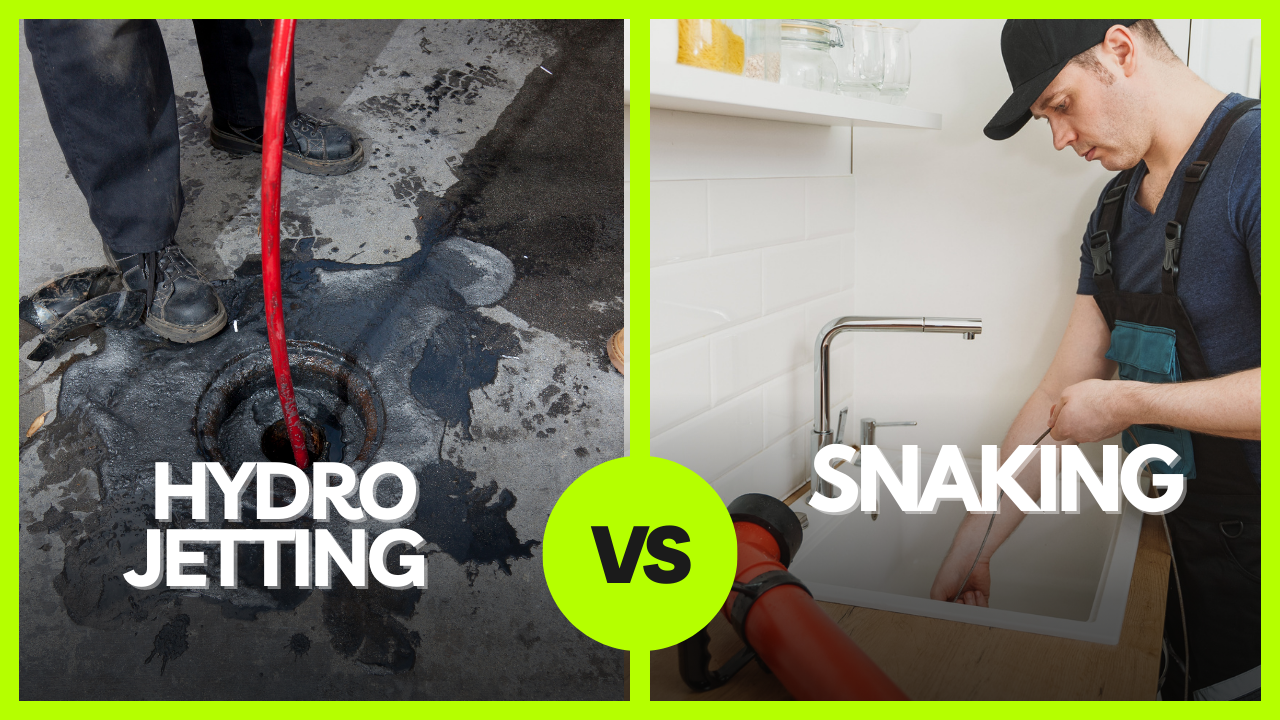
Hydro jetting and snaking are two of the most common ways to clear obstructions from drain systems, particularly after chemicals and plungers fail. Each serves its purpose, but homeowners often wonder which is better. The choice depends on the drain pipe’s material and age, and also the type and frequency of clogging.
 Quick Takeaways
- Hydro jetting usually works best for severe or repeated clogs.
- Snaking typically works best for clogs that are isolated and simple.
- Hydro jetting cleans the entire pipe.
- Snaking is faster and less invasive, but may only temporarily address the problem.
- A professional camera inspection is the best way to determine your choice.
Is Hydro Jetting Better Than Snaking?
Hydro jetting is frequently the more effective overall solution. It restores the flow rate in a drain to nearly new levels by cleaning the walls of the pipe.
Snaking is generally more cost-effective. Also, the less invasive approach may be desirable with older pipes that are no longer in great shape. Likewise, snaking works faster when there’s a single clog, such as one just down the drain from a toilet.
How Drain Snaking Works
Drain snaking is sometimes also called augering or cabling, and it involves a metal cable with a corkscrew auger. The auger physically breaks through the blockage. As it moves through the debris, the twisting action of the auger grabs and removes debris.
When Snaking Makes Sense
Snaking is a minimal approach that works well for dealing with isolated clogs. For example, an auger is great for clearing a clog made of hair and soap in a shower drain. It is a good idea if you notice a clog for the first time, especially if the clog seems to only affect one drain.
You may also want to use snaking if you know the blockage involves a foreign object. Jetting can push the object further down the drain, potentially affecting more of the system. An auger allows a plumber to retrieve the offending object.
Limitations of Drain Snaking
Snaking only creates a hole in the blockage. Especially if you’re dealing with something like a grease clog in a heavily-used kitchen sink, jetting might be the better option. Augers can also scratch the interior of pipes, promoting cracks and rust.
How Hydro Jetting Works
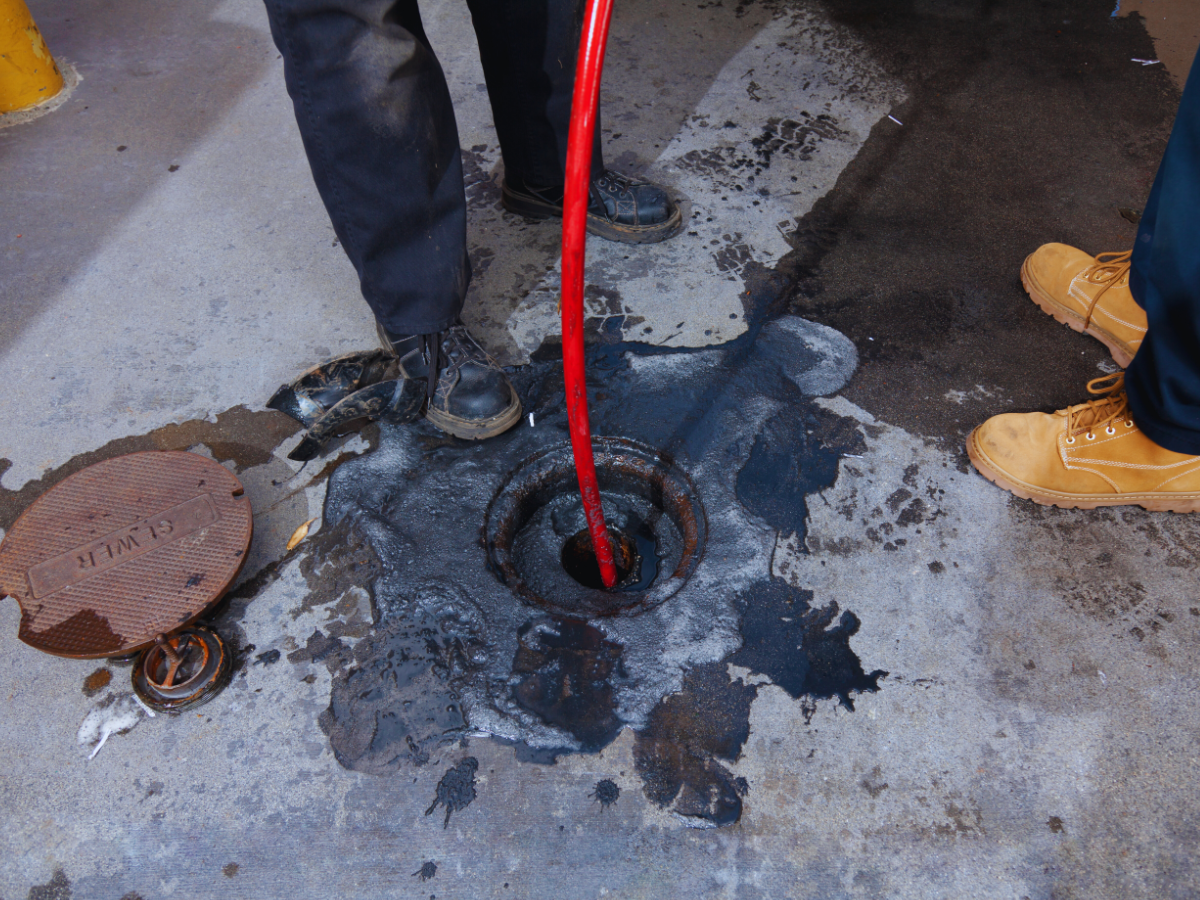 Our plumbers use a high-pressure system to jet water into a drain. The nozzles spray in multiple directions, maximizing cleaning.
This rids the drain of:
- Grease
- Soap scum
- Scaling
- Mineral deposits
- Tree roots
Jetting is also excellent for dealing with short or long drains. It is particularly useful if you’re dealing with a main sewer line that has recurring problems. In many cases, we can access a cleanout, so there’s usually no need to dig to access the lines.
When Hydro Jetting Is the Better Option
A major sign that hydro jetting might be necessary is when several drains are concurrently having trouble. This often means there’s a bigger problem in the main sewer line, and hydro jetting is necessary.
It also works best when the main problem is buildup. If your household uses a lot of soap or your municipal water has high mineral levels, hydro jetting is a solid choice.
Many people schedule hydro jetting as a preventative measure. Some folks request hydro jetting after the holidays, for example. Other households may only schedule it every few years. You should also consider hydro jetting after purchasing a house, just to know the condition of the pipes.
Hydro jetting is particularly a better option when there’s a tree-root intrusion in the main sewer drain outside. It can be hard to access this part of the system with a drain snake.
Is Hydro Jetting Safe for Pipes?
The process is safe for modern pipes that are intact. This typically means materials like PVC and cast iron. We always perform a camera inspection to verify that the pipe is still thick and free of collapses and cracks. Our plumbers will calibrate the pressure level to what they find.
Hydro jetting poses a risk to older clay pipes. Also, aging cast iron pipes may not withstand the pressure. If there are collapsed sections, heavy offsets, or other forms of major structural damage, then you should avoid hydro jetting a pipe. The upside is that hydro jetting can work very well in modern and smooth systems with tight joints.
Key Differences Between Hydro Jetting and Snaking
 Snaking opens a pathway through a clog. Hydro jetting clears the clog and cleans up all buildup from the pipe walls. Snaking restores flow, while hydro jetting scrubs the entire pipe. Residue can quickly build up around the area where the blockage was perforated from snaking, while hydro jetting typically provides at least a full year of good service.
Drain snaking is best when there’s a localized and small clog in a branch line. These are the clogs usually associated with things like hair buildup in bathroom sinks and showers or grease buildup in a kitchen sink. Hydro jetting is the best choice for repeated problems, tree root intrusions, heavy grease, and anything in a main sewer line.
Snaking is optimal for older and fragile pipes that require a less aggressive approach. Hydro jetting is ideal for structurally sound pipes. Snaking has a lower upfront cost, but may lead to more calls. Hydro jetting is more expensive, but usually leads to fewer calls.
Which Method Lasts Longer?
Hydro jetting almost always provides longer-lasting results. It offers complete clearing, while snaking only pokes a hole in the obstruction.
Why a Professional Inspection Matters
Our plumbers have camera equipment that allows us to fully assess the situation. We can determine what type of clog is present. Also, we can verify the type and condition of the pipes.
Frequently Asked Questions About Hydro Jetting vs Snaking
Is hydro jetting always better than snaking?
Jetting works best for recurring clogs, heavy buildups, long-term prevention, and anything involving a main sewer line. Snaking works best for isolated and simple clogs. It is a quicker and gentler choice for older and more fragile lines.
Can hydro jetting damage old pipes?
Yes, the pressure can do more damage if a pipe is already compromised. Be careful about hydro jetting pipes that are cracked, collapsed, crumbling, or rusty.
Why does my drain keep clogging after snaking?
Snaking only opens the flow. It doesn’t remove the whole obstruction. The remnant of the blockage can quickly start building a new blockage.
Is hydro jetting worth the cost?
If you’re dealing with recurring blockages, hydro jetting is almost always worth the cost. Conversely, snaking might be cheaper and better for a one-off blockage, such as hair in a sink drain.
How do plumbers decide between hydro jetting and snaking?
We start with a camera inspection. Once we know how widespread the problem is, the nature of the clog, and the condition of the pipes, we can recommend either hydro jetting or drain snaking.
Why Bradenton Relies on Benjamin Franklin Plumbing
 Benjamin Franklin Plumbing is the choice of many homeowners in Bradenton, FL, and the surrounding areas. We are trusted local experts who can quickly diagnose drain problems and recommend cleaning options. When you call us, you can expect a quick response because we’re the punctual plumbers.
If your Bradenton home has a clog, contact Benjamin Franklin Plumbing right away.