During Florida’s long rainy seasons, it’s crucial to regularly test your sump pump to make sure it’s working. A properly working sump pump can help protect your home from flooding and water damage. You can check your sump pump by testing the power, lifting the float and running a water test.
Here, we’ll cover the best ways to test your sump pump and some of the most common mistakes that homeowners make during the process.
 Quick Takeaways
- You should test your sump pump at least twice annually.
- The best way to check your sump pump is with a water test.
- Your pump should turn on, pump water out and then shut off cleanly.
- If your sump pump is making strange noises or running nonstop, there is an issue.
- By testing before the stormy season, you can prevent water damage from a flooded basement.
Why It’s Important To Check Your Sump Pump Regularly
Sump pumps often fail “quietly.” This means that you could be completely unaware that you have a problem until your basement floods. Many times, sump pump failures happen during a heavy rainstorm, leaving it too late to fix the problem without experiencing damage.
When you live in Florida, your home has a greater risk of flooding due to our long rainy seasons and our high levels of groundwater. By checking your sump pump on a regular basis, you can avoid expensive repairs by catching small issues before they become big ones.
How To Check if Your Sump Pump Is Working
There are several different methods you can use to check your sump pump. These methods range from quick visual inspections to full system checks.
Step 1 – Check Power and Visual Condition
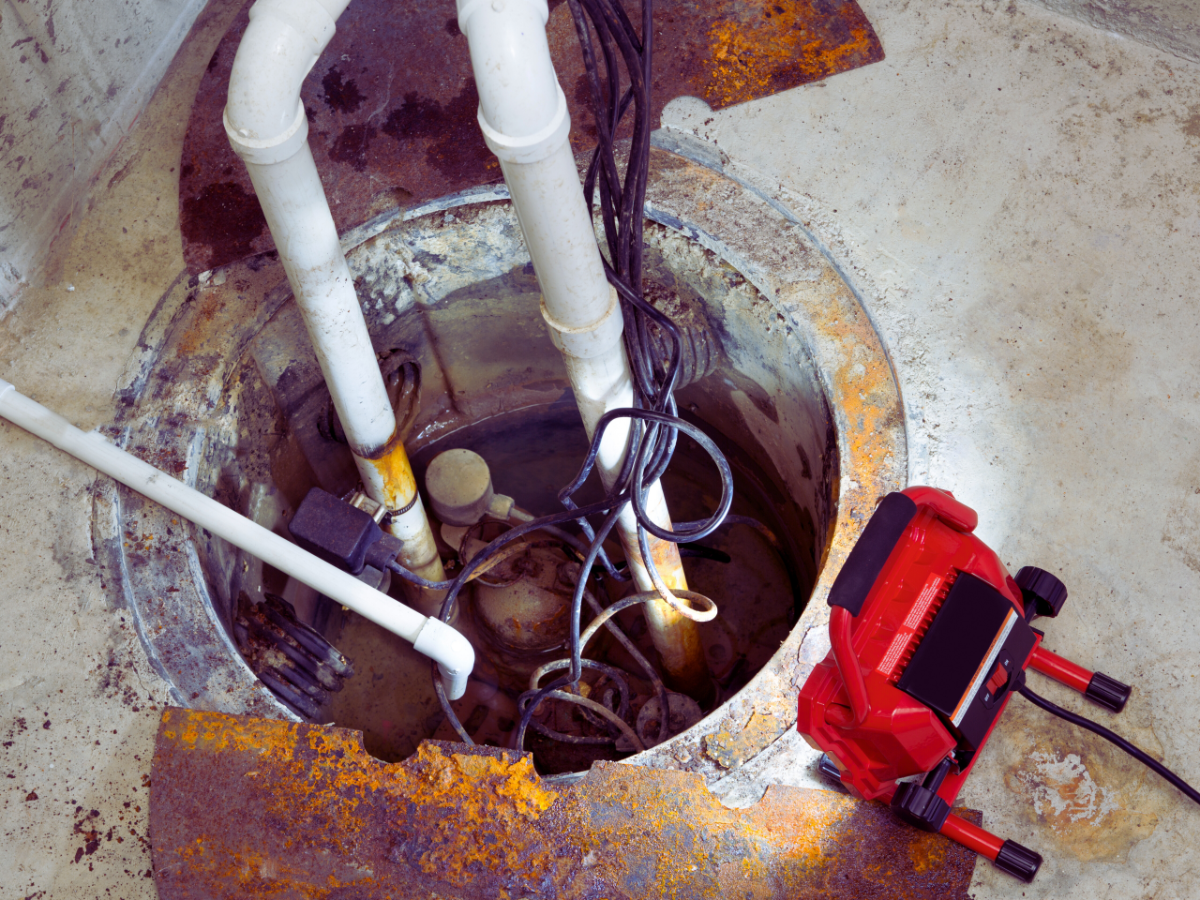
First, make sure that your sump pump is actually plugged in. Look around for any debris, rust or loose connections that may be affecting its performance. You should also check the circuit breaker (or GFCI) to ensure it is working properly.
Step 2 – Test the Float Switch
If you want to quickly check your sump pump without hauling water, test your float switch. First, reach into the pit and lift the float upward. Make sure that the float isn’t stuck against the pit wall or tangled in cords.
If it’s in good working condition, the pump should automatically turn on. Be sure to only run your pump for a few seconds while it’s dry to avoid damaging its motor.
Step 3 – Perform a Water Test
This test is the most reliable way to make sure your entire system is working properly. To start, slowly pour water into the sump pit. About five gallons is enough.
You should see the float rise, triggering the pump to activate. Your motor should run smoothly (without any grinding or rattling noises), and the water level should drop rapidly. Once the pit is empty, the pump should automatically shut off.
Step 4 – Check the Discharge Line
Regardless of how well your pump motor works, if water cannot exit, it will inevitably back up into your basement.
Go outside and locate your discharge outlet. Make sure to remove any leaves, dirt or debris that may be blocking the opening. Look for any clogs or water pooling near the foundation.
Step 5 – Test the Backup System (if Installed)
Many sump pumps have a backup system that is designed to take over if there is a power outage (or primary pump failure). To test your backup system, unplug your primary pump and slowly pour water into the sump pit.
The water should rise higher than it usually does until it hits the backup float switch. If it is working correctly, the backup pump should remove the water and then automatically shut off.
Signs Your Sump Pump Is Not Working Properly
 The best way to prevent costly repairs from a flooded basement is to make sure your sump pump works. Here are some of the most common signs that indicate your sump pump is not working properly:
- Your sump pump keeps tripping the breaker.
- The pump runs, but the pit doesn’t lower.
- It runs nonstop or short-cycles.
- You hear odd noises or see visible rust.
- The backup system fails.
Also, if you notice damp carpet, a musty odor or peeling paint, your sump pump might not be working fast enough (or at all). A broken or ineffective sump pump damages your drywall, causes mold growth and leads to property damage.
How Often Should You Test a Sump Pump?
In general, you should test your sump pump at least twice a year. Florida homeowners should test their sump pumps before the rainy or hurricane season begins and also after long, dry periods.
Common Mistakes Homeowners Make When Testing Sump Pumps
Regularly checking your sump pump is essential to prevent water damage to your property. However, sometimes homeowners with sump pumps make mistakes while checking their equipment.
Here are some of the most common mistakes homeowners make:
- Only lifting the float without fully testing it by using water.
- Confirming that the pump turns on, but not walking outside to make sure water is actually exiting the pipe.
- Forgetting to test their battery backup.
- Assuming that because their sump pump is “quiet,” it is working efficiently.
Ignoring these essential points can lead to motor damage or provide you with a false sense of security. By not forgetting these critical steps, you can help ensure your sump pump works correctly when you need it the most.
FAQs About Checking a Sump Pump
Here are some of the most common questions asked by Florida homeowners about checking a sump pump.
How do I know if my sump pump is working during heavy rain?
Listen for it to cycle on and off. You should hear the hum of the motor followed by the sound of water flowing through the pipe. During heavy rain, it may run every few minutes. Keep an eye on water buildup. The water should never reach the top of the pit.
Can I test my sump pump without water?
Yes, you can test if the motor and switch are functional without using water. But you must be brief to avoid damaging the motor. This method is also less reliable than a water test.
What does a failing sump pump sound like?
If your sump pump is failing, you may hear grinding, screeching, loud rattling or excessive clicking noises.
Should I test my sump pump before hurricane season?
Yes, before hurricane season is the most critical time to ensure your sump pump is working properly. Testing your sump pump early is one of the best ways to protect your property against flood damage.
When should I call a plumber to inspect my sump pump?
Call a plumber if your sump pump is showing irregular behavior, indicating a mechanical or electrical failure or if it is over 7 years old.
Schedule Sump Pump Service With Benjamin Franklin Plumbing
 Homeowners can save money by preventing sump pump issues before they require emergency repairs. Our punctual plumbers at Benjamin Franklin Plumbing are standing by to provide sump pump inspections, repairs and replacement services for homeowners in Bradenton, FL and the surrounding area.
To get your sump pump inspected before hurricane and storm season arrive, reach out to schedule services today.